Ultimate Media Buying Toolkit: 5 Crucial Checklists for Launching Profitable Ad Campaigns
Are you pulling your hair out over media buyingThe process of purchasing advertising space and time on various media platforms, including digital and traditional media. campaigns that just won’t perform? The constant cycle of launching campaigns, only to watch them fall flat, can leave you feeling defeated and questioning whether media buying is even worth the effort.

The painful truth is that many marketers fall into the same trap: rushing through the planning stages in the desperate hope of quick wins. This often leads to overlooked details and missed opportunities crucial for success.
You might skip necessary research, neglect thorough testing, or underestimate the power of a well-crafted strategy. Each misstep adds up, resulting in underperforming campaigns and budgets that bleed dry, leaving you with nothing but frustration and regret.
At Powerhouse Affiliate, we understand the agony of seeing your media buying efforts fizzle despite your best intentions. We know the sting of watching competitors thrive while you struggle to keep your head above water. That’s why we’re here to offer a solution—a meticulous, step-by-step approach that ensures every aspect of your campaign is optimized for success.
Say goodbye to the chaos and disappointment and embrace a strategy that promises consistent, powerful results.
Our comprehensive “Standard Operating Procedures” give you or your staff a clear roadmap to guide you from niche selectionThe process of identifying and choosing a specific market segment to target in affiliate marketing efforts. to post-launch optimization.
It is designed to help media buyers avoid the common mistakes that cause others to fail, giving you the tools and knowledge to craft campaigns that convert. Following our step-by-step process, you’ll move from a reactive, rushed mindset to a proactive, strategic one, ready to dominate your nicheA specialized segment of the market for a particular kind of product or service, often catering to a specific audience or solving a particular problem. and achieve the affiliate marketing success you’ve always envisioned.
Instructions for Media Buyers
Below, you will see five specific sections that may require extensive work within each section.
Each section below has a dedicated blog post and checklist. (available for our premium members).
It is advised that you read each section in order as you plan and execute every new advertising campaign. You can print off all of the worksheets to have copies if you prefer working with pen and paper.
The checklists consider the niche and research, the offers available in your niche, the target audiences, the campaign planning and setup, budget and ROIReturn on Investment, a key performance indicator calculated as a percentage by dividing profit by cost and multiplying by 100. planning, and post-campaign launch optimization checklists.
These documents are available on Google Drive and are “View Only. This means you need to make a copy of the documents if you wish to edit them. You can also print them.
So, let’s dive into the five most CRUCIAL steps to launching and managing profitable media buying campaigns.
Step 1: Niche Selection.
We have developed a comprehensive Niche Selection Checklist for Online Marketers.
Proper Niche Research is Crucial for Media Buying
Selecting the right niche is the first strategic decision to make or break your media buying campaign. A carefully chosen niche ensures you target a specific audience with a clear demand for your product or service.
Here are some of the considerations when using the Niche Selection Checklist:
Market Demand Analysis:
Use Google Trends to identify search trends over time. Tools like Google KeywordThis is the term or phrase that users utilize to search for anything on the internet. This can also be the term focused on by SEO experts to drive organic traffic to their website. Planner or SEMrush can help you find search volumes and keyword trends. Industry reports from sites like Statista can provide insights into market sizes and growth projections.
Look for niches that show consistent interest over time. Avoid niches with only seasonal or sporadic interest unless you plan to time your campaigns accordingly.
Use Semrush to analyze competitors’ websites, ads, and keyword strategies. Identify your competitors and assess their strengths and weaknesses.
Audience Demographics:
Once you have selected the niche, it’s time to research your target audience. Our Customer Avatar Worksheet is a critical step in this process.
This worksheet helps you define your target audience’s age, gender, income level, education, and interests. Your buyer persona represents your ideal customers.
Is Your Niche a Profitable One?
Check affiliate networks like ClickBank or CJ Affiliate for average commissionThe monetary reward affiliates receive for successfully promoting offers and driving desired actions. Commission structures vary and may be based on leads# sales# or other conversion metrics defined by the advertiser. rates. Forums and niche-specific sites can provide additional insights into profitability.
Calculate potential earnings based on average commissions, earnings per click, and sales volume. Consider the cost of acquiring customers versus the expected revenueTotal earnings from promoting an offer, regardless of profitability.. Check Google Keyword Planner for the estimated cost per click for keywords in your niche.
Before taking the next steps, ensure that your chosen niche offers a healthy profitTotal affiliate earnings, calculated by subtracting total cost from total revenue generated. margin that justifies your investment of time and money.
Working in a niche you’re passionate about can keep you motivated and engaged, leading to better content and marketing strategies.
Affiliate Offer Selection Checklist for Online Marketers
Step 2: Select the Right Offers or Products
Choosing the right offer to pitch to your audience is essential to your campaign’s success. The offer must be relevant to your niche and provide real value to your audience.
We have developed a comprehensive Offer Selection Checklist for Online Marketers.
Here’s how to use the Affiliate Offer Selection Checklist:
Ensure the product or service aligns with the needs and interests of your target audience. The closer the match, the higher the potential for conversions. A relevant offer increases engagement and the likelihood of converting visitors into customers.
Review the affiliate program details on the network’s website. Compare offers with one-time payments versus recurring commissions. Consider the payout frequency and minimum payout thresholds.
Choose offers that provide a good balance between payout amount and frequency, aligning with your income goals. Look for historical performance data and reviews on affiliate forums and networks. Select offers with proven high conversion rates. High conversion rates mean more sales and better ROI for your marketing efforts.
Research the vendor’s reputation through online reviews and affiliate forums. Ensure the vendor has a good track record for timely payments, product quality, and customer service.
Check the affiliate program’s resource section. It helps if they provide marketing materials, such as banners, email templates, and product information, to enhance your promotional efforts. Quality resources can significantly improve your marketing efficiency and effectiveness.
Step 3: Create the Perfect Landing Page/Funnel for Your Media Buys
A well-designed landing page or funnel is critical for converting traffic into leads or sales.
We have developed a comprehensive Landing Page/Funnel Checklist for Online Marketers.
Use page builders like Optimizepress to build professional high-converting landing pages and funnels. Optimizepress helps to utilize whitespace effectively to avoid clutter. Their designs are mobile-responsive, as a significant portion of traffic may come from mobile devices.
A well-designed landing page reduces bounce rates and keeps visitors engaged, increasing the likelihood of conversions.
Leverage copywriting frameworks like AIDA (Attention, Interest, Desire, Action) or PAS (Problem, Agitation, Solution). Write compelling headlines that grab attention, followed by persuasive content that highlights the benefits of the offer.
Use bullet points to make information easy to digest and include a strong call-to-action (CTA).
Effective copywriting convinces visitors to take the desired action, whether signing up for a newsletter, downloading a free resource, or purchasing.
Test your page speed using Google PageSpeed Insights, GTmetrix, or Pingdom. Optimize images, leverage browser caching, and minimize HTTP requests. Consider using a Content Delivery Network (CDN) to speed up load times.
Faster loading times improve user experience and reduce drop-off rates, leading to higher engagement and conversion rates.
Test different versions of your landing page to see which elements (headlines, images, CTAs) perform best. Based on the results, continuously optimize.
Outcome: A/B testing helps you identify the most effective elements of your landing page, leading to improved conversion rates over time.
Step 4: Campaign Planning for Media Buyers
Effective campaign planning ensures all strategy elements are aligned and working together seamlessly. It involves setting clear goals, allocating resources efficiently, and defining your key metrics.
We created a Campaign Planning Checklist that includes an ROI estimation worksheet crucial in setting up profitable campaigns.
Here’s how to use the Campaign Planning Checklist:
Define clear, measurable goals for your campaign. These could be increasing website traffic, generating leads, or achieving a specific number of sales.
Clear goals provide direction and a benchmark for measuring success.
Use our budget planning tool to determine your overall budget and allocate funds across different channels (e.g., PPC, social media, email marketing). Include a buffer for unexpected expenses.
Proper budget allocation ensures you don’t overspend and can sustain your campaign over its planned duration.
Analyze data from previous campaigns or industry benchmarks. Choose the most effective channels to reach your target audience (e.g., social media, search engines, email). Focusing on the right channels maximizes your reach and ROI.
Plan out your content calendar, including blog posts, social media updates, and email campaigns. Ensure your content is aligned with your goals and audience interests. A well-planned content strategy keeps your audience engaged and drives them towards conversion.
Step 5: Post-Launch Campaign Optimization Checklist

Once your campaign is live, continuous monitoring and optimization are essential to maintain and improve performance. This involves analyzing data, making adjustments, and scaling successful strategies.
You can use our in-depth Campaign Optimization Checklist to complete this step.
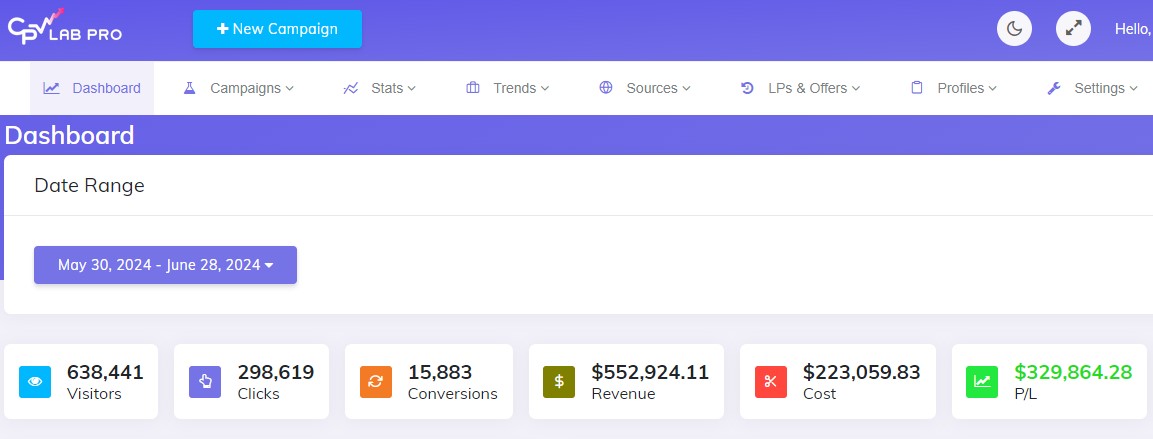
Use Google Analytics or tracking platforms like CPV Lab Pro, ad platform metrics like Google Ads, or Facebook Ads Manager, or other analytics platforms relevant to your campaign.
Track key performance indicators (KPIs) such as click-through rates (CTR), conversion rates, cost per acquisition (CPA), and return on ad spend (ROAS). Monitor these metrics in real-time.
Regular performance monitoring helps you identify trends, spot issues early, and understand what’s working and what’s not. Analyze your data to understand user behavior, traffic sources, and conversion paths. Identify high-performing and underperforming segments.
In-depth data analysis provides actionable insights that can guide your optimization efforts. Continuously test different elements of your campaign (e.g., ad copy, landing page design, CTAs). Implement the winning variations and iterate further.
A/B testing helps you optimize your campaign for better performance by systematically improving elements based on data-driven decisions.
Create targeted campaigns for different audience segments. Tailor your messaging and offers to match the specific needs and interests of each segment. Segmented campaigns are generally more effective because they speak directly to the unique needs of different audience groups, leading to higher engagement and conversion rates.
Reallocate your budget based on performance data. Increase investment in high-performing channels and reduce spending in underperforming areas. Optimizing your budget allocation ensures that your resources are being used most effectively, maximizing your overall ROI.
Regularly update and refresh your content to keep it relevant and engaging. This could include updating blog posts, social media content, and ad creatives.
Fresh content keeps your audience engaged and improves your SEO rankings, driving continuous traffic to your campaign.
Once you have identified high-performing tactics, scale them up. This could mean increasing your ad spend on successful campaigns, expanding to new channels, or replicating successful strategies in new markets. Scaling successful strategies helps you achieve greater reach and higher returns on your marketing efforts.
Recap:
Following these comprehensive checklists, you can systematically plan, execute, and optimize your affiliate marketing campaigns. Each checklist is a critical component of your overall strategy, ensuring no important detail is overlooked. Here’s a quick summary of how to integrate these checklists into your workflow:
Start with Niche Selection: Choose a profitable and engaging niche that aligns with your interests and market demand.
Select the Right Affiliate Offers: Ensure your promotional offers are relevant and reputable and provide good commission structures.
Create Effective Landing Pages and Funnels: Design and optimize landing pages to convert traffic into leads or sales.
Plan Your Campaigns Thoroughly: Set clear goals, allocate your budget wisely, and define your target audience.
Monitor and Optimize Post-Launch: Continuously track performance, analyze data, test variations, and scale successful strategies.
By integrating these steps and using the provided tools, you can enhance the effectiveness of your affiliate marketing campaigns and achieve better results.
Feel free to adapt and expand upon this guide to suit your specific needs and audience. This structure provides actionable steps and tools to implement them effectively.
Frequently Asked Questions:
Why is niche selection so important in media buying campaigns?
Niche selection is crucial in media buying because it determines your target audience. Choosing the right niche ensures there is a clear demand for your product or service, which increases the chances of your campaign’s success. A well-chosen niche also helps you focus your marketing efforts and resources more effectively.
How do I know if a niche is profitable?
To determine if a niche is profitable, conduct market demand analysis using tools like Google Trends, Google Keyword Planner, and SEMrush. Check affiliate networks like ClickBank or CJ Affiliate for average commission rates and profitability insights. Calculate potential earnings based on average commissions, EPC, sales volume, and customer acquisition costs. Ensure the profit margins justify your investment of time and money.
What should I look for when selecting an affiliate offer?
When selecting an affiliate offer, ensure it aligns with the needs and interests of your target audience. Review the affiliate program details, including payout amounts, frequency, and minimum payout thresholds. Look for offers with high conversion rates and positive reviews about the vendor’s reputation for timely payments, product quality, and customer service. Quality marketing resources provided by the affiliate program can also enhance your promotional efforts.
How can I create a high-converting landing page?
To create a high-converting landing page, use page builders like ClickFunnels 2.0 to design professional and mobile-responsive pages. Utilize whitespace effectively to avoid clutter and write compelling headlines using copywriting frameworks like AIDA (Attention, Interest, Desire, Action). Optimize page speed and continuously test different elements (e.g., headlines, images, CTAs) to identify the most effective components.
What are the key elements of effective campaign planning?
Effective campaign planning involves setting clear, measurable goals, allocating your budget efficiently, and defining key metrics. Use a budget planning tool to determine your overall budget and allocate funds across different channels. Plan your content calendar to ensure alignment with your goals and audience interests. Analyzing data from previous campaigns or industry benchmarks can help choose the most effective channels for reaching your target audience.
How should I optimize my campaign post-launch?
Post-launch optimization involves continuous monitoring and data analysis. Use tools like Google Analytics, CPV Lab Pro, or ad platform metrics to track key performance indicators (KPIs). Conduct A/B testing to optimize different campaign elements and create targeted campaigns for different audience segments. Reallocate your budget based on performance data and regularly update your content to keep it relevant and engaging. Scaling successful strategies can help achieve greater reach and higher returns.
How often should I update my campaign content?
Every ad platform is different and some of them like Facebook will allow you to monitor the ad frequency. Be sure to keep your ads fresh so they do not burn out. Regularly updating your campaign content is important to keep it relevant and engaging. This includes refreshing blog posts, social media content, and ad creatives. Frequent updates improve your SEO rankings and maintain audience interest, driving continuous traffic and engagement.
What tools can help me with niche selection and campaign optimization?
Tools like Google Trends, Google Keyword Planner, SEMrush, and Statista can help with niche selection by providing insights into market demand and trends. For campaign optimization, tools like Google Analytics, CPV Lab Pro, GTmetrix, Pingdom, and ad platform metrics (e.g., Google Ads, Facebook Ads Manager) are useful for tracking performance and making data-driven adjustments.
What does it mean to scale an Ad campaign?
Scaling a campaign means expanding its reach and effectiveness to increase overall returns. This can involve increasing ad spend on successful campaigns, extending the campaign to new channels or markets, and replicating successful strategies across different segments. The goal is to amplify the impact of your most effective tactics to achieve greater results.
How do I know when my campaign is ready to be scaled?
Your campaign is ready to be scaled when it consistently performs well and meets or exceeds your key performance indicators (KPIs) such as click-through rates (CTR), conversion rates, cost per acquisition (CPA), and return on ad spend (ROAS). Before scaling, ensure you have a solid understanding of what elements contribute to your campaign’s success and have a reliable tracking system in place.
What are some effective strategies for scaling a campaign?
Effective strategies for scaling a campaign include:
Increasing Ad Spend: Gradually increase your budget on high-performing campaigns to boost their reach. Increasing Ad Spend: Gradually increase your budget on high-performing campaigns to boost their reach. Monitor key performance metrics like CTR and conversion rates to ensure the additional spend is generating meaningful returns. One of the actionable tips for Google Ads is to allocate more budget to campaigns with a proven history of strong ROI, while testing new strategies on a smaller scale to minimize risk. This approach helps optimize ad spend effectively while supporting scalable growth.
Increasing the Number of Accounts: Sometimes, you can increase traffic on a single platform by adding more accounts and scaling horizontally rather than vertically (raising the budget).
Expanding to New Channels: Test and implement your campaign on new marketing channels where your target audience is active.
Targeting New Segments: Create tailored campaigns for different audience segments based on demographics, interests, or behaviors.
Replicating Successes: Apply successful strategies and tactics from your current campaign to new markets.
Testing New Marketing Angles: Sometimes you can find cheaper and scalable traffic by testing new angles to sell your offers.

Joey Babineau
Founder, Powerhouse Affiliate
Joey Babineau has spent over 20 years as a full-time affiliate marketer and paid-media buyer, personally running and scaling campaigns across Google Ads, native, push, and social traffic. He founded Powerhouse Affiliate to teach the exact strategies behind his own real campaigns, breaking down live spend, ROI, and the offers that actually convert.